Checklist
The Checklist
The 27 questions every elite seller asks. Surfaced when they matter.
Inside every Situation Room there's a Checklist for the stage that deal is in. Early-stage discovery surfaces different items than late-stage close. You see only what's relevant for where the deal actually is.
How to use it
Step 1
Ask the question on your next call.
Each item is phrased as something you'd actually say to a buyer. "What needs to happen between now and signing — on both sides?" reads naturally. You don't read the wording verbatim; you ask the question in your own voice.
Step 2
Check the item off when you've covered it.
When you check the box, a text field opens underneath. This is where the value lives.
Step 3
Paste in what the buyer said.
Not a summary. Not your interpretation. The actual answer, in the buyer's words. "Marcus said he'd intro me to legal by Wednesday." "She mentioned the new CFO is reviewing all software spend over $50K personally."
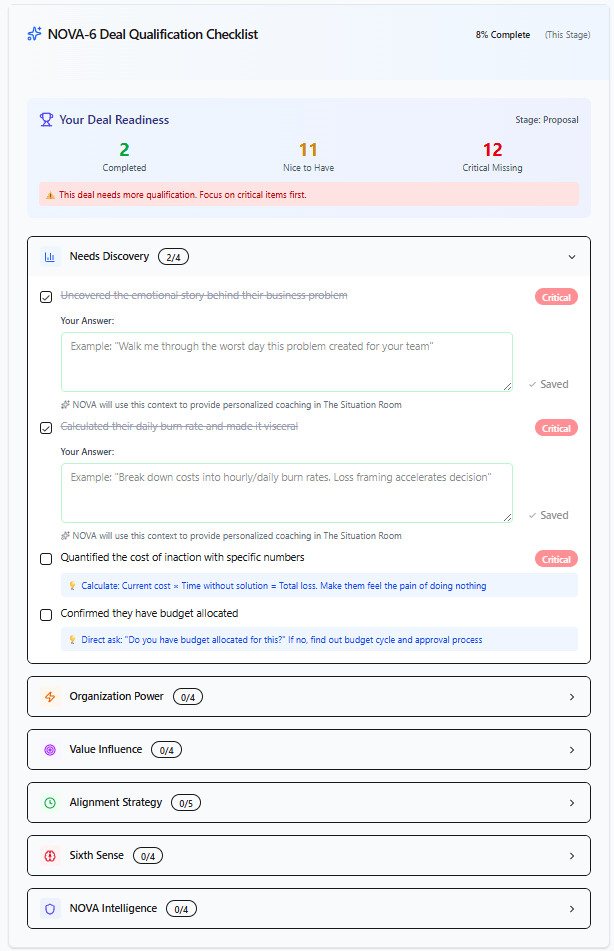
Why the text box matters
The check itself tells the system you covered the question. The text box tells the system what you learned. That's the difference between a checklist that lives in a tab and a checklist that makes the next deal review sharper.
Tomorrow's TMVAs use it. If the buyer said they'd introduce you to their CFO this week, that becomes a follow-up action — not because you have to remember to add it, because you captured it once.
The Situation Room reads it. The next time you open the deal, the brief reflects what you've actually heard, not what was guessed from CRM fields.
Your manager benefits too. If you're on a Team plan, the manager 1:1 playbook is built on what you've actually captured — so the conversation is about the real deal, not a generic deal review.
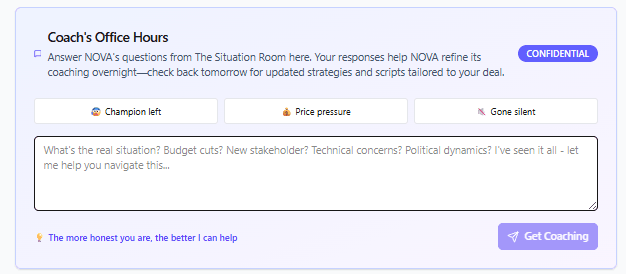
When to fill it in
- Right after every call. Two minutes while the answers are still in your head beats an hour next Friday trying to reconstruct what was said.
- After a meaningful email exchange. If a buyer answered a key question over email, paste the relevant line in.
- Before any 1:1 with your manager. The richer the Checklist, the more strategic the conversation can be — your manager isn't asking you what's going on; they're coaching you on what to do next.
A note on the 27
You'll never see all 27 at once. The Checklist surfaces what matters for the stage the deal is in. Early-stage deals see Needs Discovery and Organization Power questions. Late-stage deals see Alignment Strategy and Sixth Sense.