
The First 30 Minutes of Your Sales Day Decide the Other Eight
A concrete first-30-minutes routine for sales reps: find the 2-3 deals that need a move today, do the avoided thing first, and define done.
You sit down with coffee, open your inbox, and the day picks your priorities for you. By lunch the hard call you meant to make is still sitting there, and the deal that needed you most is the one you never touched.
I did this for years. I'd tell myself I was "getting organized" by clearing email first. What I was actually doing was handing my sharpest hours to whoever happened to email me at 7:14am. A teammate asking for a deck. A prospect with a scheduling question. A manager forwarding a Slack thread. None of it moved a deal. All of it felt like work.
Your morning is not eight hours of equal value. The first ninety minutes, before the meetings stack up and the mental noise sets in, is when you're actually capable of doing the thing that closes business. That's when you can write the email that reframes a stalled deal. That's when you can make the call you've been avoiding. Spend it sorting attachments and you've spent gold to buy gravel.
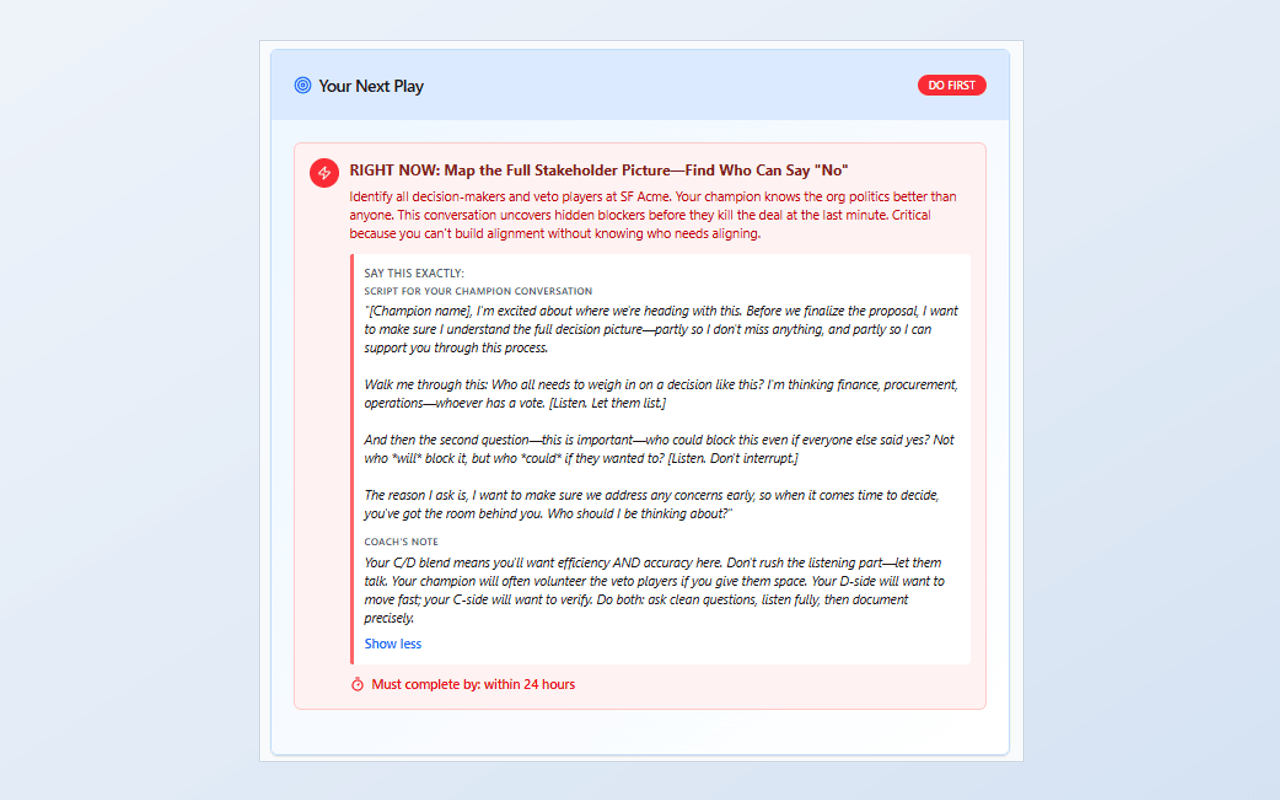
Why your inbox is lying to you
Email feels urgent because it's loud. Loud and important are not the same thing. The message sitting at the top of your inbox got there because of timing, not stakes. Most of it is other people's priorities wearing your name in the "to" field.
And there's a quieter cost. Every small decision you make burns a little fuel. Reply to this or flag it. Forward or handle it. Book the meeting or push it. By the time you've triaged forty emails you've made a hundred tiny calls, and your brain is tired before you've done a single thing that matters. That's decision fatigue, and reps walk straight into it every morning by choice.
So flip the order. The first thirty minutes happen before you open email. Not in a notebook you'll abandon by Thursday. Just three questions, done standing up if you have to.
Minute zero to ten: find the deals that actually need a move
Open your pipeline, not your inbox. Look at it cold and ask one thing of each deal. Does this need a move from me today, or am I just hoping it moves on its own?
Most deals don't need you today. That's fine. You're hunting for the two or three that do. They usually look like one of these:
- A stalled deal with no next step. No meeting on the calendar, no clear "what happens next." A deal without a next step isn't slow. It's dead and hasn't told you yet.
- A champion who went quiet. The person who was replying in an hour now takes three days, or stopped. Silence from your champion is data. Something changed on their side and you're the last to know.
- A proposal sitting unanswered. You sent pricing, got a "let me review with the team," and then nothing. Every day that document sits there it gets colder and easier for them to do nothing.
You're not building a list of everything. You're finding where momentum is leaking. Two deals is normal. Three is plenty. If you find eight, you're not prioritizing, you're panicking, and you need to be honest about which two are real.
Minute ten to twenty: pick the one thing you're avoiding, and do it first
Now look at your two or three deals and find the action you least want to do. You already know which one it is. It's the call to the champion who went dark, because you're scared the answer is no. It's the direct question to the buyer about budget, because right now you can still pretend the deal is alive.
Do that one first.
This is the whole game. Reps clear easy busywork first because it feels productive and it's safe. Sending a follow-up template to a warm lead, updating a field, confirming a meeting that was never in doubt. Little wins, zero risk. But the avoided action is avoided precisely because it's the one that actually changes the outcome. The hard thing is hard because it carries the truth.
And you're at your best right now. The version of you at 4:30pm, drained from six meetings, is not going to make that call. They're going to "do it tomorrow." Tomorrow's morning will have its own avoided thing. The pile grows. Use your fresh brain on the action that scares you, while you still have the nerve for it.
One reframe that helped me. The hard call usually isn't about closing. It's about discovery you skipped. The champion went quiet because you never really understood who else had power in that account, or what they personally needed to win. When you stop guessing and ask the real question, you're not being pushy. You're finding out whether you have a deal at all. Knowing today beats hoping for three more weeks.
Minute twenty to thirty: decide what done looks like
Before you touch email, write down what would make today a real day. Not a to-do list. One or two outcomes.
"I got a straight answer from the champion on the Acme deal." "The proposal has a decision date on it." "I know whether the budget is real or imagined." That's done. It's about whether a deal moved, not how many tasks you closed.
The point of naming "done" is that it protects you from your own afternoon. When the day gets loud, and it will, you have a marker. You can take the calls and answer the emails and still know whether the day counted, because the thing that mattered already happened before nine. The idea of carrying a tiny list of today's highest-value actions in your head, instead of a sprawling task app, is half of staying sane in this job.
Then, and only then, open your inbox. It'll still be there. Most of it can wait, and now you'll handle it with the calm of someone who already did the important thing.
This isn't about working more
I'm not asking you to start earlier or grind harder. The thirty minutes already exist. You're spending them. The only question is whether you spend them on the two deals that need you or on the noise that found you.
Try it for a week. Pipeline before inbox. Hard thing first. Name your done. Then ask yourself an honest question at the end of those five days: how many deals moved because of something you did in the morning, instead of something you reacted to?
The whole NOVA-6 framework is free: six dimensions, the exact questions elite reps ask, and a one-page blueprint you can pin to your desk.
Explore the free NOVA-6 academy →Key takeaways
- Your first ninety minutes are your sharpest. Spend them on deals, not on whatever emailed you first.
- Open your pipeline cold and find the two or three deals that genuinely need a move today: a stalled deal with no next step, a quiet champion, an unanswered proposal.
- Pick the action you're avoiding and do it first, while you still have the nerve. Easy busywork feels like progress but rarely changes the outcome.
- Decide what "done" looks like in terms of a deal moving, not tasks cleared, then open your inbox.
- The avoided call is usually discovery you skipped. Asking the real question tells you if you have a deal at all, today instead of in three weeks.
Keep learning — free, no signup
The same field-tested playbook this article draws from, in the free Sales Academy.
Ashish Kohli
Ashish spent two decades carrying a sales quota and managing reps across wireless, B2B, and enterprise, and taught sales at the college level. He's building Opsight, an AI sales coach that adapts to how each rep actually sells instead of coaching everyone the same way.
Get the next one in your inbox
A short, practical note on sales coaching and deal health every week or two. No fluff, no spam, unsubscribe anytime.
No spam. Unsubscribe anytime.